Why Does Weaning Pose the Greatest Challenge for Piglets? The Answer May Be Hidden in Their First 100 Days
Reference
Diamond G, Beckloff N, Weinberg A, et al. β-Defensins: Farming the Microbiome for Homeostasis and Health. Frontiers in Immunology. 2019;10:326. https://doi.org/10.3389/fimmu.2019.00326
Statement
This article is a translated and condensed summary based on the above review article. The content has been reorganized for scientific communication and educational purposes and does not represent the complete views of the original publication. Readers are encouraged to consult the original article for comprehensive information.
Many swine producers face the same challenge: shortly after weaning, piglets often experience recurrent diarrhea, reduced growth performance, and poorer feed conversion efficiency. Even with antibiotic treatment, fluid therapy, or dietary adjustments, symptoms may improve temporarily only to reappear, creating a frustrating cycle with no obvious pattern.
Traditionally, these problems have been attributed to pathogens such as Escherichia coli, rotavirus, and coronavirus. While these infectious agents undoubtedly contribute to enteric disease, accumulating evidence suggests that the underlying issue may not simply be the pathogens themselves, but rather an incompletely developed intestinal defense system.
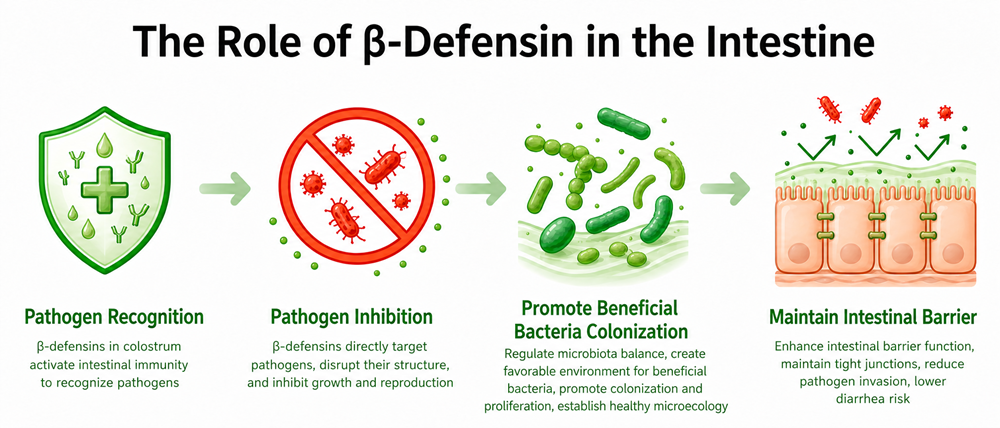
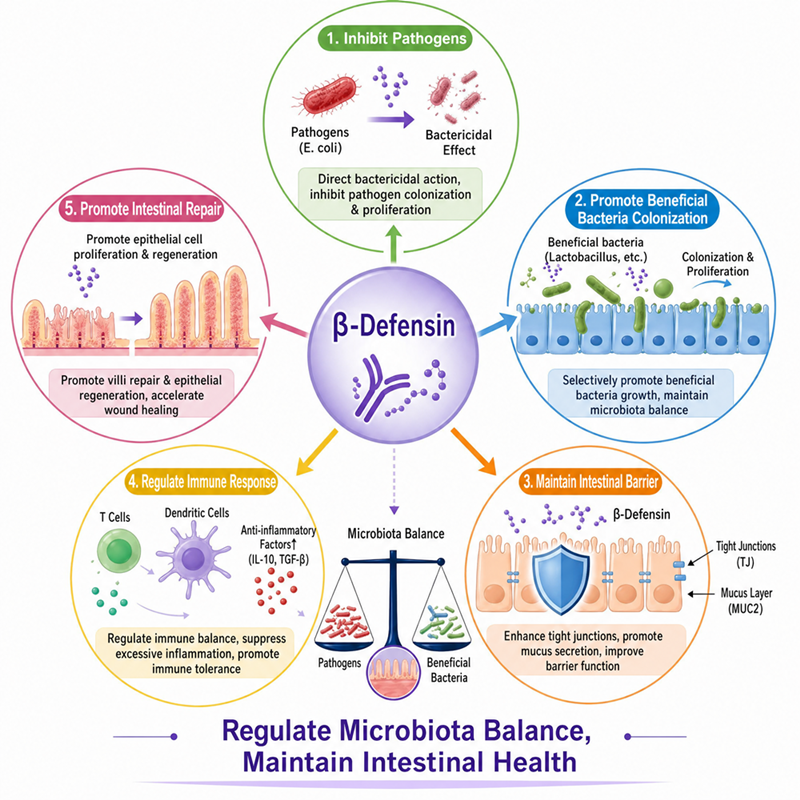
According to a review by Diamond et al. (2019), the first 100 days after birth represent a critical window for the establishment of the gut microbiota and immune system. During this period, β-defensins, a family of natural host defense peptides, play an indispensable role. Beyond suppressing the excessive growth of opportunistic pathogens, β-defensins also facilitate the colonization of beneficial bacteria, thereby laying the foundation for a stable and resilient intestinal ecosystem.
Early Microbial Colonization Shapes Long-Term Health
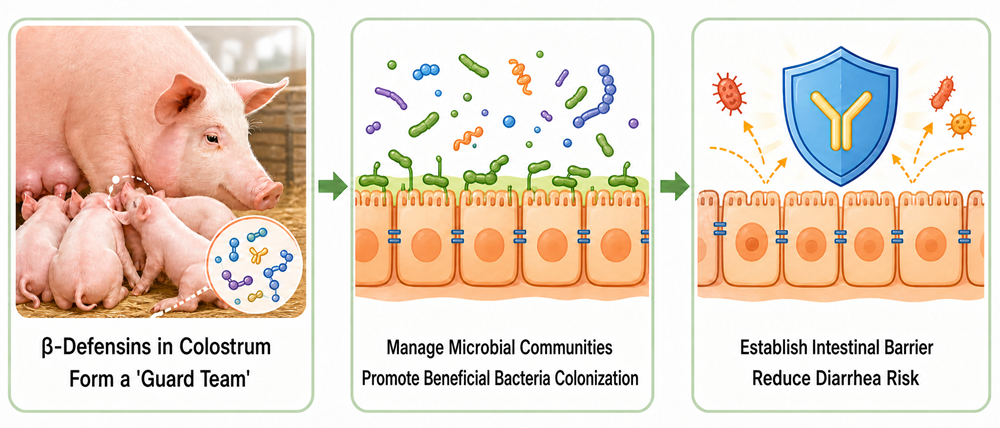
The first 24 hours after birth represent a critical window for the initial establishment of the intestinal microbiota in piglets. Colostrum provides not only antibodies, but also natural host defense peptides such as β-defensins, which act as a frontline “guard system” on the intestinal surface. Rather than simply killing bacteria, these peptides help regulate the composition of the microbial community.
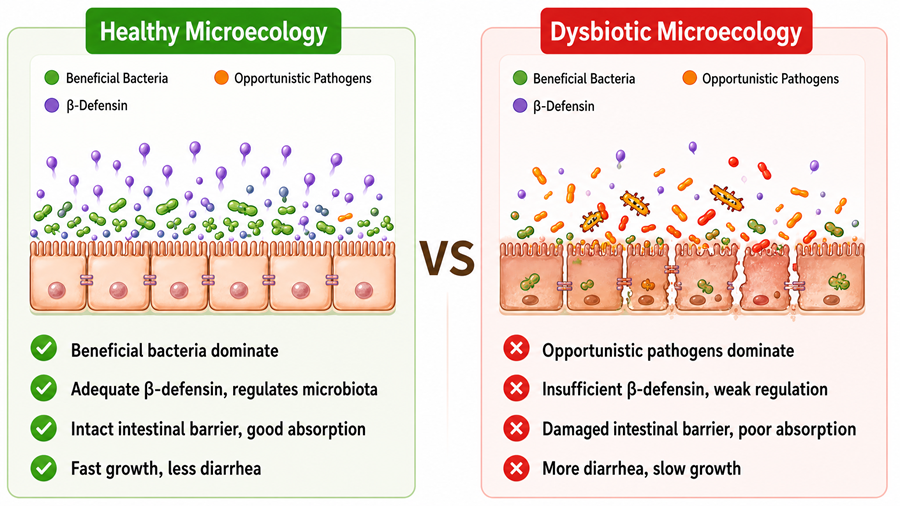
However, factors such as insufficient colostrum intake, poor hygiene, temperature fluctuations, and weaning or regrouping stress can disrupt this delicate balance. As beneficial bacteria decline and opportunistic pathogens gain dominance, intestinal barrier function is compromised and diarrhea follows. Even when pathogens are subsequently controlled by medication, recurrent enteric disorders are likely if the microbial ecosystem itself is not restored.
As emphasized by Diamond et al. (2019), β-defensins are more than antimicrobial molecules—they are key regulators of the microbiome and essential guardians of intestinal health.
Why Is Colostrum So Critical?
 |
Colostrum provides far more than nutrients and maternal antibodies—it serves as the starting signal for the establishment of the intestinal microbiota. Concentrations of β-defensins are significantly higher in colostrum than in mature milk, allowing these natural host defense peptides to form a protective barrier within the gut, regulate microbial communities, and promote the development of a stable intestinal ecosystem.
This may help explain why piglets receiving adequate colostrum management often exhibit lower incidences of diarrhea and more consistent growth performance.
|
Management Implications: From Pathogen Elimination to Microbiome Management
For decades, the primary strategy for controlling post-weaning diarrhea in swine production has been to identify and eliminate pathogens. However, accumulating evidence suggests that pathogen control alone is insufficient to ensure intestinal health (Diamond et al., 2019).
- Eliminating pathogens alone cannot guarantee microbial homeostasis.
- A truly healthy gut is characterized by its ability to maintain and regulate its own microbial ecosystem.
- β-Defensins are an essential component of this intrinsic regulatory capacity.
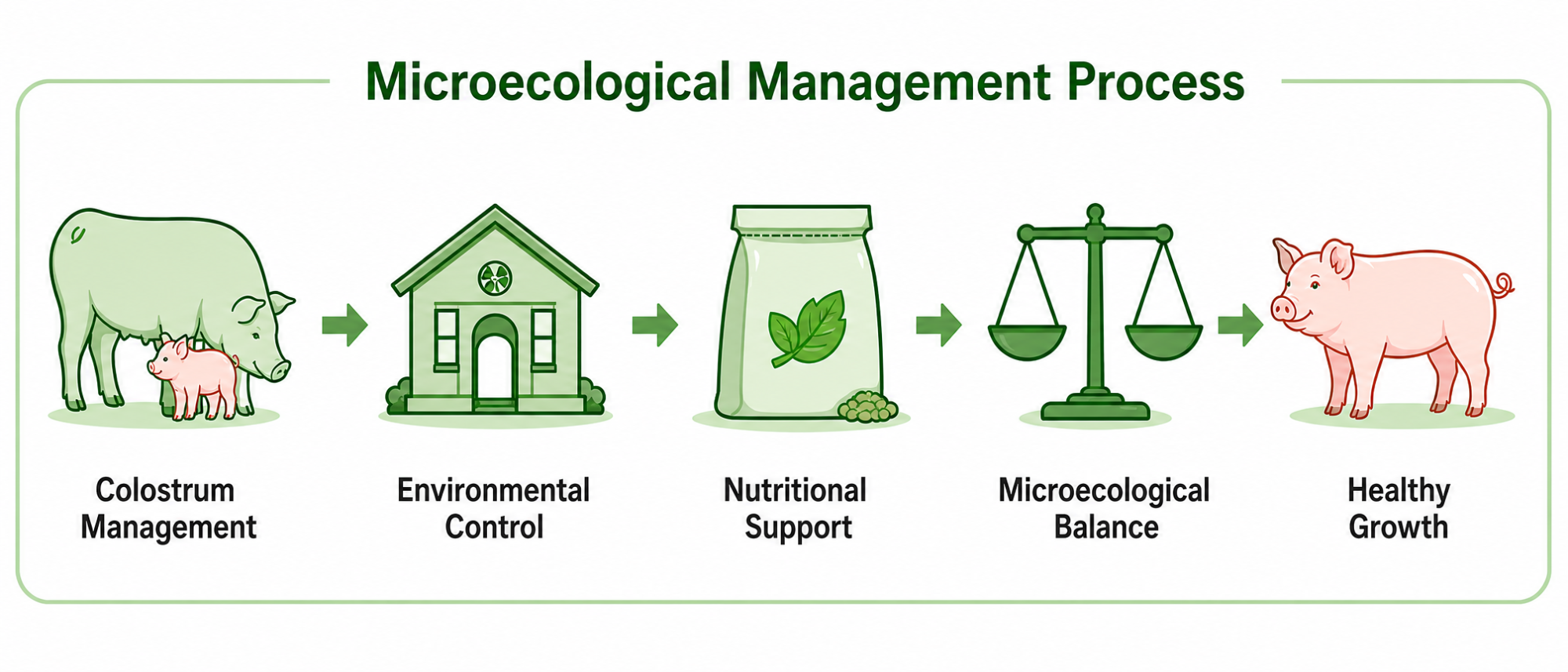
In other words, reducing post-weaning diarrhea requires more than simply targeting pathogens. Greater attention should be given to the establishment and maintenance of a balanced intestinal ecosystem, which forms the foundation for long-term gut health and animal performance.
Join the Discussion
Have you experienced recurrent diarrhea or digestive disorders in piglets after weaning? Beyond nutrition and environmental management, what other factors do you think may be overlooked?
We welcome you to share your experiences, challenges, and insights in the comments. In future articles, we will select representative questions and explore science-based solutions together with the industry.
|

 HUADE INSIGHTS | Why What Really Determines a Chick’s Future May Happen Before Hatch, Not After?
 HUADE BIOTECH VIV Exhibition Recap | We Look Forward to Meeting Again
 HUADE INSIGHTS | Is Fish Disease Becoming Harder to Prevent? The Real First Line of Defense May be Lost Not in the Gills, but in Natural Immunity
 4 Days To Go | Huade Biotech Is Ready For VIV — We’re Waiting To Meet You
