
| RUMINANT |
 |
|
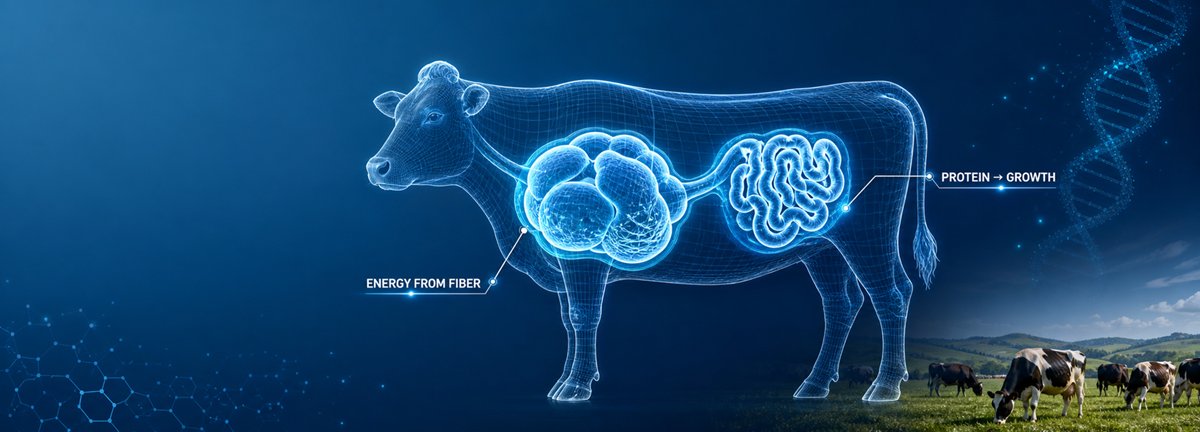
Feed Efficiency in Ruminants Isn't Decided in the Rumen Alone The rumen does the heavy lifting on fiber fermentation and energy supply — that part of ruminant nutrition is well understood. What gets less attention is what happens next: the small intestine, where microbial and bypass protein are digested into the amino acids that actually build muscle, milk, and growth.
At HUADE, this is where we focus — supporting udder health, calf and lamb development, and cattle growth performance, at the points in the system that translate digestion into results on the farm. |
|
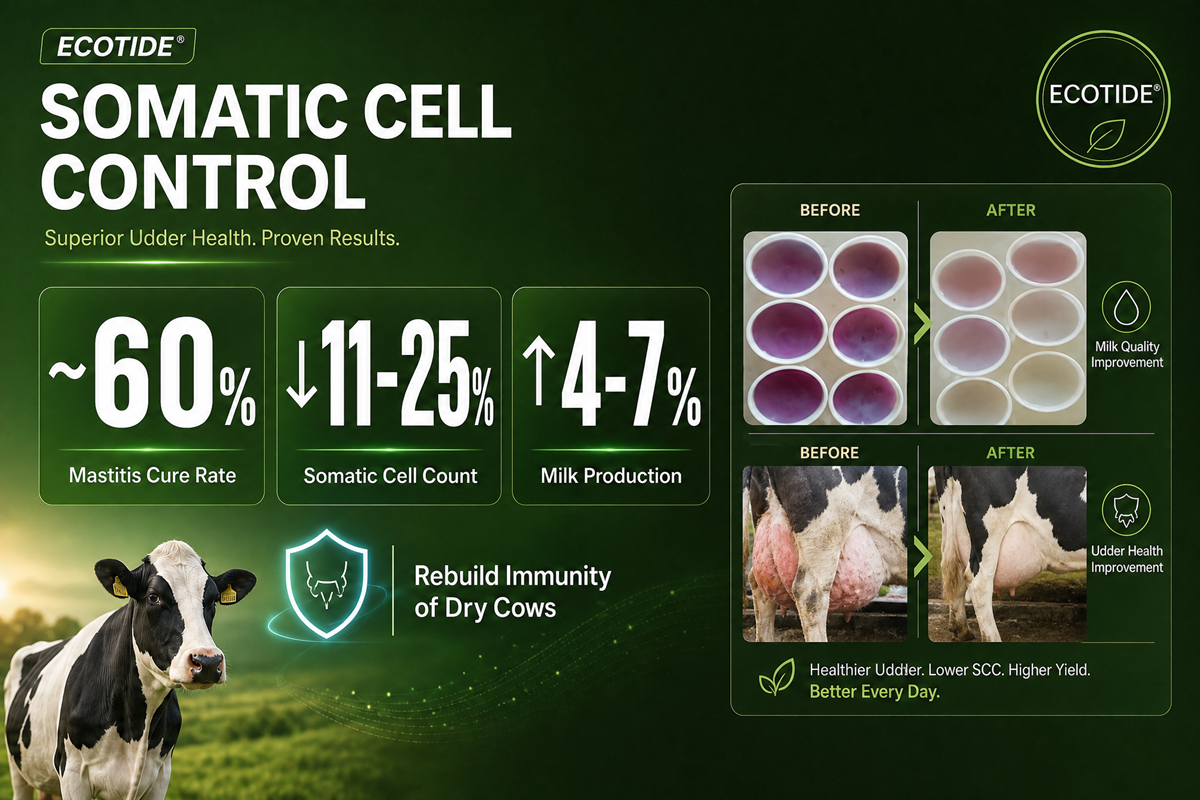
Somatic Cell Control Mastitis doesn't just cut yield in the moment — chronic cases often lead to early culling of otherwise productive cows, and the combined cost of discarded milk, treatment, and labor adds up fast. In commercial dairy trials, Ecotide has been shown to: ✦ Cure mastitis in roughly 60% of treated cases ✦ Reduce somatic cell count by 11–25% ✦ Increase milk production by 4–7% ✦ Increase unit milk yield by 3–4% ✦ Help rebuild immunity in dry cows [See how Ecotide Ruminant supports under health →] |
 |
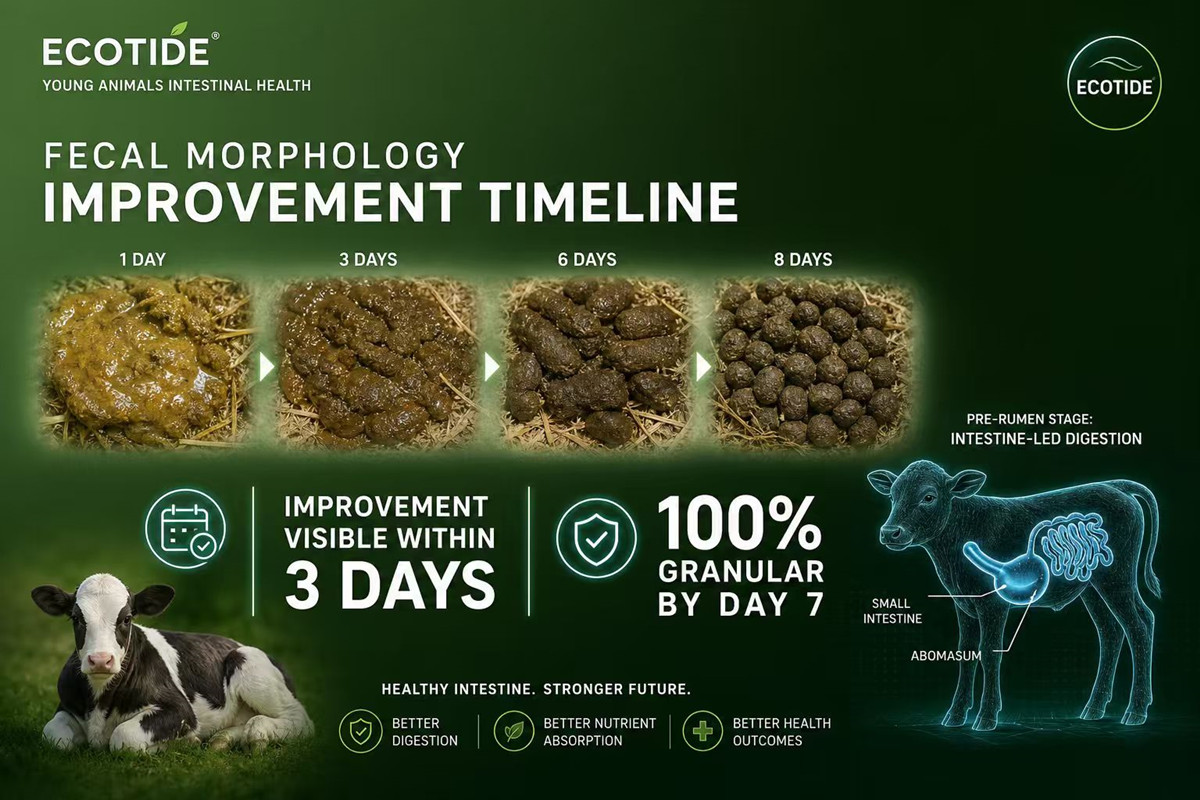 |
Guarding the Intestinal Health of Young Animals Colostrum and early milk carry a dense mix of proteins, growth factors, and immune compounds that newborn calves and lambs depend on — far more than mature milk alone provides. After weaning, calves and lambs lose access to all of it at once, right as their diet structure changes. The result: stalled intestinal development, epithelial damage, reduced digestion and absorption, and diarrhea — all of which slow growth. In a commercial sheep trial, adding Ecotide to drinking water produced visible improvement in fecal morphology within 3 days — and by day 7, feces were fully granular with no mucous stool, alongside improved daily feed intake. [Explore Tipek and Ecotide for young ruminant health →] |
|
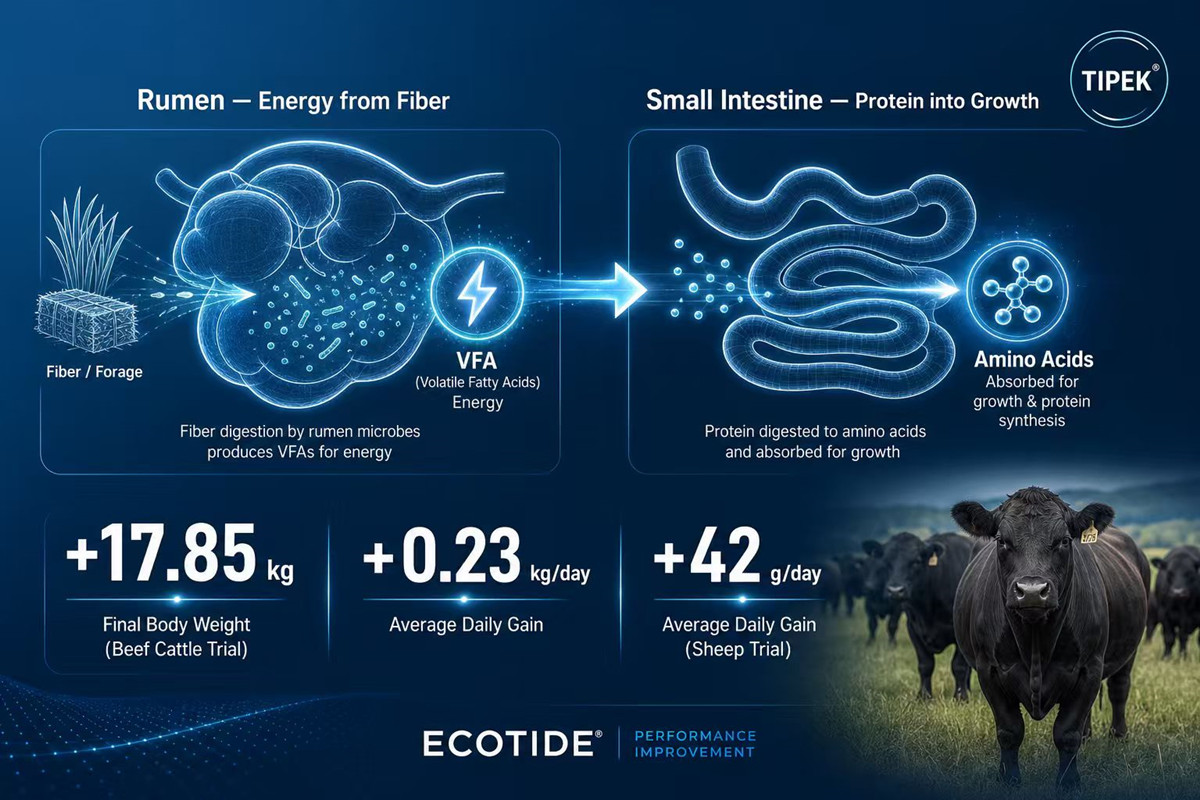
Improvement of Performance Rumen fermentation determines how much energy an animal extracts from fiber and forage — but growth itself depends on what happens next: the small intestine, where microbial and bypass protein are broken down into the amino acids that actually build muscle and drive weight gain. A healthy intestinal lining determines how much of that protein gets absorbed rather than passed through. In a 50-day commercial trial on a 3,000-head Simmental beef farm, cattle receiving Tipek gained 17.85 kg more body weight per head than the control group, with average daily gain up 0.23 kg/head. In a parallel 30-day trial on a 3,000-head sheep farm, lambs receiving Tipek showed average daily gain improve by 42 g/head, reaching 1.3 kg more body weight per head than the control group. |
 |
