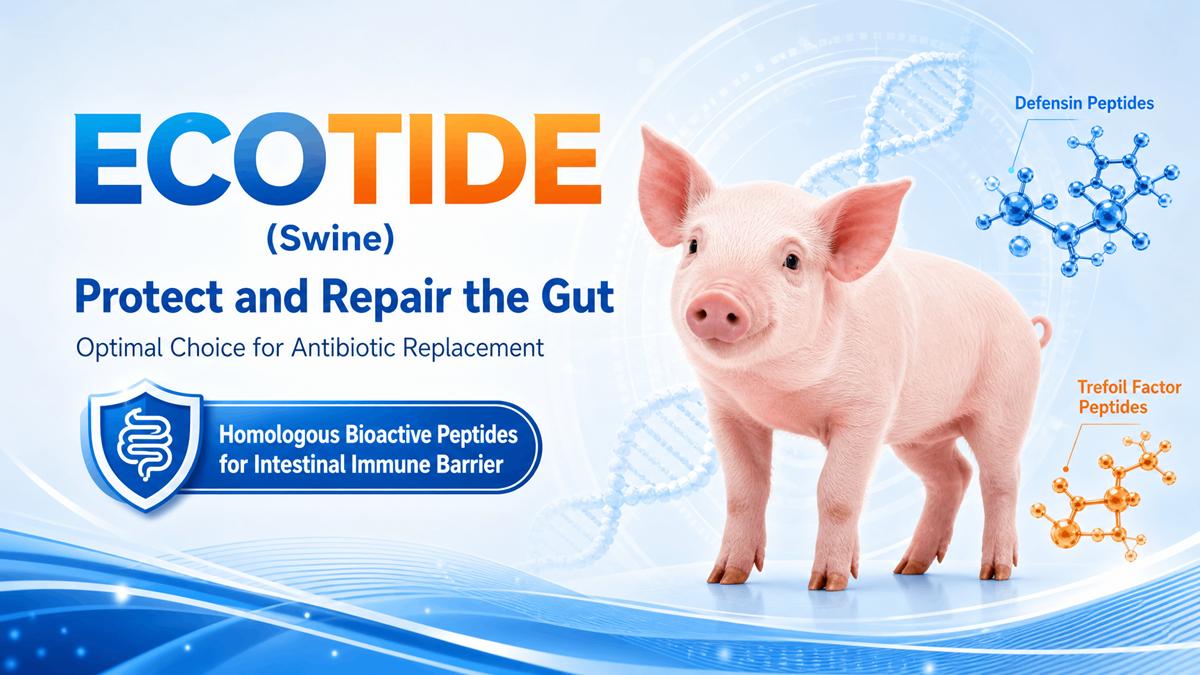
Same Feed, Different Results: Why Do Some Piglets Thrive While Others Keep Getting Sick?
References Diamond G, Beckloff N, Weinberg A, et al. β-Defensins: Farming the Microbiome for Homeostasis and Health. Frontiers in Immunology. 2019;10:326. https://doi.org/10.3389/fimmu.2019.00326 Statement This article is a translated and condensed summary based on the above review article. The content has been reorganized for scientific communication and educational purposes and does not represent the complete views of the original publication. Readers are encouraged to consult the original article for comprehensive information. In commercial swine production, producers often observe the same puzzling phenomenon: piglets raised under the same conditions—with identical feed, management, and housing—can show remarkably different performance. While some grow rapidly and remain healthy, others suffer from recurrent diarrhea and poor weight gain. The first questions that usually come to mind are: Is the diet properly formulated? Were the vaccination programs effective? Is the housing environment adequate? These factors certainly influence animal performance. However, growing scientific evidence suggests that one of the most important determinants of pig health and growth lies in the gut microbiome and its ability to maintain microbial balance.
The pig intestine is home to a vast and dynamic microbial ecosystem composed of beneficial bacteria, opportunistic pathogens, and commensal microorganisms. Rather than serving solely as a digestive organ, the gut functions as a highly regulated ecosystem. According to Diamond et al. (2019), β-defensins are more than natural antimicrobial peptides—they act as key regulators of the gut microbiome, maintaining microbial homeostasis and ultimately influencing animal health, intestinal function, and growth performance. The gastrointestinal tract is the primary site for nutrient digestion and absorption. However, what ultimately determines feed efficiency and animal health is not the feed itself, but the stability of the gut microbiome.When beneficial bacteria are abundant and the microbial community remains balanced, nutrients are digested and absorbed more efficiently, the immune system develops properly, and piglets achieve faster growth with a lower incidence of disease.Conversely, when microbial balance is disrupted and opportunistic pathogens outcompete beneficial bacteria, piglets are more likely to experience diarrhea, poor digestion, and impaired immune function—even when they receive exactly the same diet. According to Diamond et al. (2019), β-defensins help maintain microbial homeostasis by regulating interactions between the host and its gut microbiota. This, in turn, enhances disease resistance and improves nutrient utilization.
In other words, the stability of the gut microbiome sets the foundation for optimal health, feed efficiency, and growth performance in piglets. Key Factors Affecting Gut Microbial BalanceSeveral factors can disrupt the stability of the gut microbiome and ultimately influence piglet health and performance. 1. Inadequate Early Microbial Colonization 2. Weaning and Environmental Stress 3. Nutrition and Feed Additives 4. Hygiene and Farm Management
Taken together, these factors help explain why piglets receiving the same feed can exhibit very different growth performance and health outcomes. The key difference often lies in the stability and resilience of the intestinal ecosystem. From Disease Prevention to Growth OptimizationTraditional swine health management has largely focused on eliminating pathogens through vaccination and antimicrobial interventions. However, both scientific evidence and field experience suggest that pathogen control alone is not sufficient to ensure optimal intestinal health (Diamond et al., 2019).
The future of efficient swine production lies not only in preventing disease, but also in optimizing the gut microbiome. By supporting a balanced intestinal ecosystem, producers can enhance animals' natural resilience, improve nutrient utilization, and unlock their full growth potential. |
 HUADE INSIGHTS | Why What Really Determines a Chick’s Future May Happen Before Hatch, Not After?
 HUADE BIOTECH VIV Exhibition Recap | We Look Forward to Meeting Again
 HUADE INSIGHTS | Is Fish Disease Becoming Harder to Prevent? The Real First Line of Defense May be Lost Not in the Gills, but in Natural Immunity
 4 Days To Go | Huade Biotech Is Ready For VIV — We’re Waiting To Meet You