|
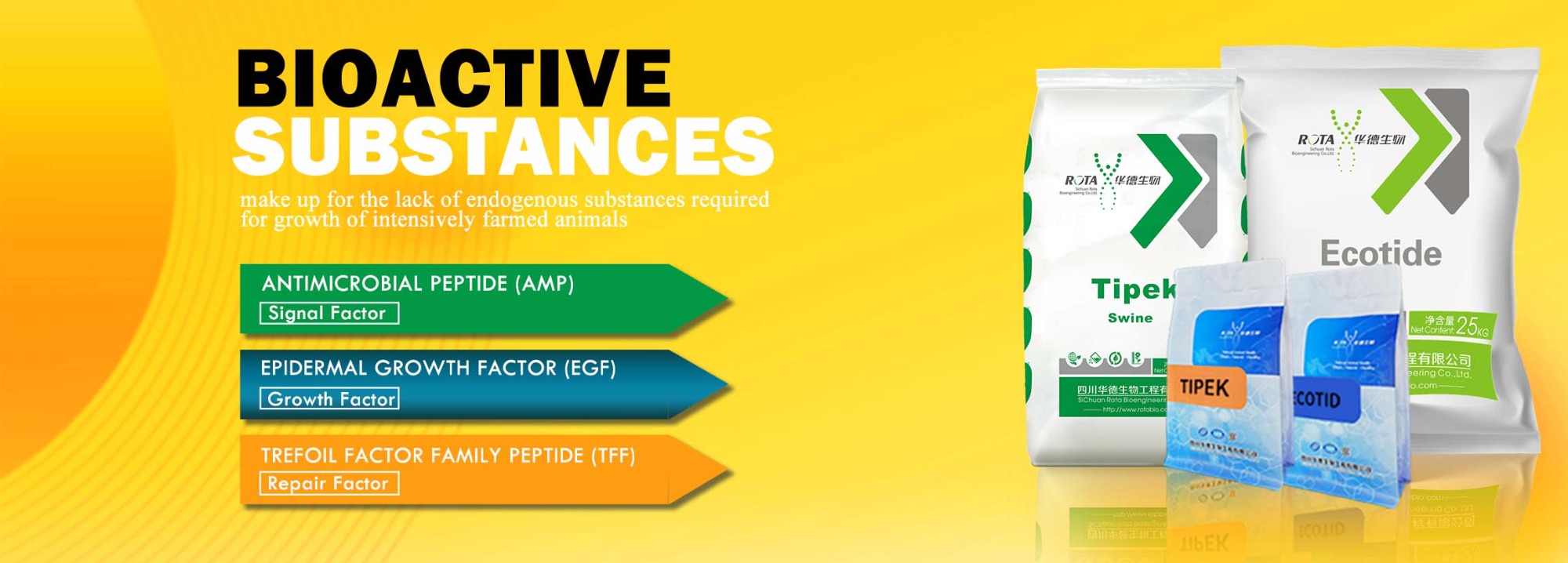
What are Trefoil Factor Family Peptides?
The trefoil factor family (TFF) is a relatively new family of polypeptides with a three-loop trefoil domain. They are mainly synthesized and secreted by the protein-secreting epithelial cells of the gastrointestinal mucosa and are closely related to mucins. Their abundant expression in different patterns under normal conditions, physiological state under different ulcer conditions and ectopic expression suggest that they play an important role in mucosal defense and repair. (1) Trefoil factors seem to play a central role in gastrointestinal mucosal defence and repair. In vitro studies show that they are effective motogens, able to stimulate epithelial restitution. (1) Where are Trefoil Factor Family Peptides? In the healthy organism, TFF peptides are distributed in numerous tissues, including the brain, kidney, liver, pancreas, respiratory tract, and salivary gland, but the most abundant expression is found in the normal GI tract where the three TFF isoforms are found to have a differential distribution. (2)
TFF1 (original name: pS2) is predominantly expressed in gastric foveolar cells and surface epithelial cells throughout the stomach and is detected in the upper ducts of Brunner’s glands in both rodents and humans.(2)
TFF2(original name: pancreatic spasmolytic polypeptide, PSP) is expressed in similar cellular locations in both rodents and humans, namely in epithelial cell types deep within the gastric glands of the corpus and antral stomach regions, in gastric mucous neck cells, and in the duodenal Brunner’s gland. (2)
TFF3(original name: intestinal trefoil factor, ITF) is predominantly expressed within goblet cells in the small intestine and colon. [2] Recent studies have reported that TFF3 is present in not only the intestinal tract but also the brain, liver, kidney, pancreas, breast, lung, conjunctiva, spleen, and lymph nodes. (3)(FIG.1) Function of Trefoil Factor A special form of rapid wound healing occurs in mucous epithelia after superficial injury, i.e., by the cell migration of neighboring cells. This process is called “restitution” and starts within minutes after damage. Thus, TFFs would be well designed to act as luminal protection peptides, enhancing restitution only after mucosal injury.(3)
TFF3 is also linked to innate immunity, as its synthesis in intestinal goblet cells is selectively induced after the activation of Toll-like receptor (TLR) 2 by commensal bacteria(4). This probably occurs by an indirect mechanism. Of note, recombinant TFF3 can rescue Tlr2KO mice from increased morbidity and mortality during acute colonic injury, probably due to its anti-apoptotic effect. (4)
They are highly conserved during evolution and are heat, acid and enzyme resistant. (1) TFF peptides play important roles in response to GI mucosal injury and inflammation. In response to acute GI mucosal injury, TFF peptides accelerate cell migration to seal the damaged area from luminal contents, whereas chronic inflammation leads to increased TFF expression to prevent further progression of disease. (2) Reference: 1. W M Wong, R Poulsom, N.A.Wright, Trefoil peptides, BMJ Journal, Gut, October 01, 1999 2. Eitaro Aihara, Kristen A. Engevik, and Marshall H. Montrose,Trefoil Factor Peptides and Gastrointestinal Function,Annu Rev Physiol. 2017 Feb 10; 79: 357–380., 2016 Dec 15. doi: 10.1146/annurev-physiol-021115-105447 3. Werner Hoffmann,Trefoil Factor Family (TFF) Peptides and Their Diverse Molecular Functions in Mucus Barrier Protection and More: Changing the Paradigm,Int J Mol Sci. 2020 Jun; 21(12): 4535. 4. Podolsky D.K., Gerken G., Eyking A., Cario E. Colitis-associated variant of TLR2 causes impaired mucosal repair because of TFF3 deficiency. Gastroenterology. 2009;137:209–220. doi: 10.1053/j.gastro.2009.03.007.
|
 HUADE INSIGHTS | Why What Really Determines a Chick’s Future May Happen Before Hatch, Not After?
 HUADE BIOTECH VIV Exhibition Recap | We Look Forward to Meeting Again
 HUADE INSIGHTS | Is Fish Disease Becoming Harder to Prevent? The Real First Line of Defense May be Lost Not in the Gills, but in Natural Immunity
 4 Days To Go | Huade Biotech Is Ready For VIV — We’re Waiting To Meet You